



By Deep Patel October 26, 2026
© 2001: A Space Odyssey, DIY Challenges @ AI-Generated
Not long ago, DIY solar occupied a fringe part of the renewable energy industry.
The typical self-installer was often portrayed as an off-grid enthusiast building a remote cabin, a prepper seeking energy independence, or a hobbyist piecing together equipment from online forums. Installing solar yourself was viewed as an alternative lifestyle rather than a mainstream option.
That stereotype no longer reflects today’s reality.
The modern DIY solar customer is increasingly a suburban homeowner looking to lower electricity costs, a rural property owner preparing for outages, or a family planning for future electric vehicles, heat pumps, or battery storage. Many are connected to the utility grid and have no interest in disconnecting from it. Instead, they want greater control over one of the largest infrastructure investments they’ll make in their home.
This evolution has transformed DIY solar from a niche market into one of the industry’s fastest-growing customer segments.
But as self-installation has become easier physically, it has also become more complicated technically. Today’s homeowners have access to more equipment, more online advice, and more purchasing options than ever before. At the same time, choosing safe, compatible, code-compliant equipment—and navigating permitting, inspections, and utility interconnection—has become increasingly complex. The future of DIY solar isn’t simply doing everything yourself. It’s knowing which parts you should do yourself—and which parts still require professional expertise.
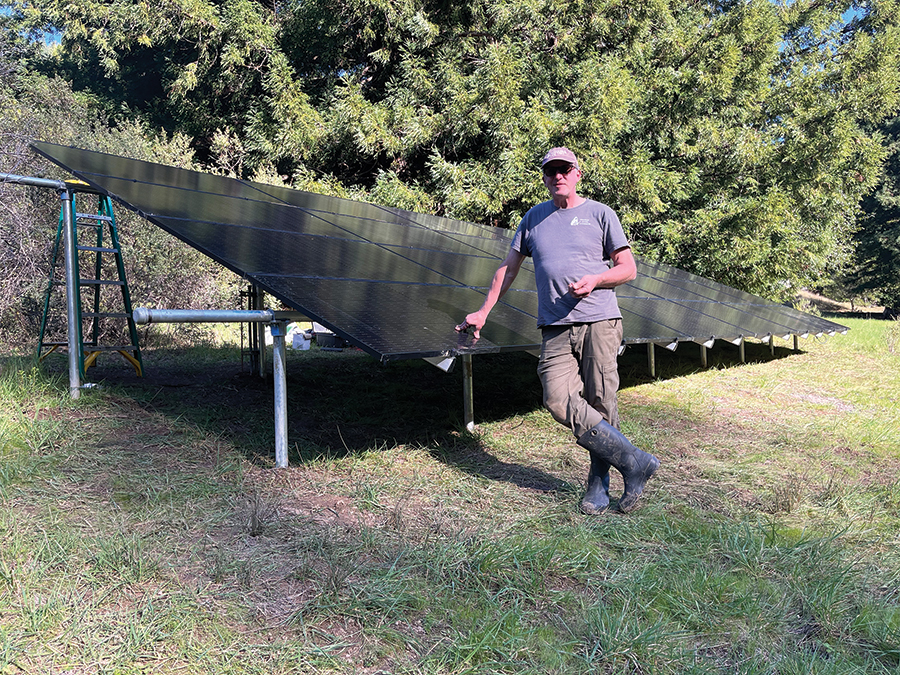
Bob Frank with his completed ground-mounted solar array. © Bob Frank, Unbound Solar
Three DIY Customers, Three Very Different Goals
One of the biggest misconceptions about DIY solar is that every self-installer looks the same.
In reality, today’s market consists of three distinct customer types, each requiring different levels of support.
The Full Self-Installer
These full self-installers typically have extensive hands-on experience as electricians, engineers, contractors, mechanics, builders, or skilled tradespeople. They’re comfortable reading plans, troubleshooting electrical systems, using specialized tools, and taking responsibility for complex construction projects.
A full self-installer may complete nearly every aspect of a solar installation, including mounting racking, installing panels, running conduit, pulling wire, configuring inverters, coordinating inspections, and completing utility interconnection paperwork. Even then, local regulations may still require a licensed electrician for certain portions of the work.
Alex Kuhlmann, in Nevada, exemplifies this group.
Although Alex has a mechanical engineering background and works in electrical software, he credits his success less to formal education than to a lifetime of working with his hands. He describes himself as someone who grew up turning wrenches, taking things apart, and figuring out how systems work. After installing his own 10.5 kW grid-tied PV system with two 15-panel arrays, he found that the physical installation was only part of the challenge.
The more difficult obstacle was navigating county engineering requirements and utility documentation, particularly after adding an EV charging load to his home. Professional system design, permit-ready plans, and engineering support helped move the project through approval.
Alex estimates that completing the installation himself saved a substantial amount compared to turnkey contractor quotes. Just as valuable, however, was gaining a deep understanding of how his system operates and how to maintain it over time.
His experience illustrates an important reality: capable DIYers still benefit from professional design and technical support.
The Hybrid DIY Installer
If one customer segment defines the future of DIY solar, it’s the hybrid installer. Rather than doing everything alone, hybrid installers divide the project strategically. They tackle work they’re comfortable performing—such as installing racking, mounting modules, trenching conduit, coordinating materials, and managing the schedule— while hiring licensed professionals for wiring, final connections, service work, or other code-sensitive tasks.
This group of hybrid DIY installers needs to know what they can safely do, what should be hired out, how to communicate with an electrician, and how to keep the project aligned with the design and permit documents. This approach combines meaningful labor savings with professional oversight and support where it’s needed most.
The main support this group needs includes: a clear system design, permit-ready plans, defined scope of work, equipment compatibility guidance, utility paperwork support, and enough technical documentation that both the homeowner and the electrician understand how the system is supposed to come together.
Eric and Lori Lynn Todd of Napa County, California, demonstrate how successful this model can be.
Wanting to be deeply involved in the project because they cared about quality, resilience, and understanding how their system worked, they managed much of the project themselves. They built the ground-mounted structure, coordinated documentation, completed trenching, and organized hundreds of individual project tasks.
Lori maintained a detailed project plan tracking every stage of construction. That was the right division of labor for their project: they handled much of the heavy work and project management, while receiving professional system design support as part of project planning and also hiring a qualified electrician to handle the code-sensitive electrical work.
Their greatest challenge wasn’t installing equipment—it was navigating Napa County’s rigorous permitting process, engineering requirements, battery regulations, and fire marshal reviews. Without professional design, documentation, and guidance, that process could have been extremely difficult.
Today, their solar-plus-storage system provides seamless backup power during outages, giving them greater resilience alongside long-term energy savings. They now power through outages without even knowing the grid went down.
Their project reflects a growing trend throughout the industry: homeowners want to stay involved without assuming unnecessary risk.
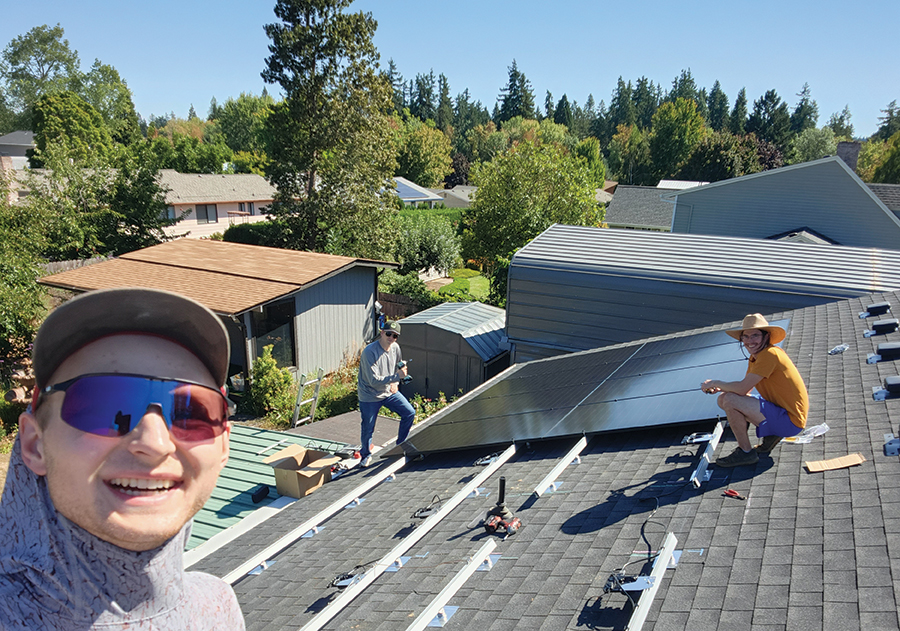
Sunni Schoepe (left) with helpers during a rooftop solar installation. Many guided DIY projects are collaborative, with homeowners taking an active role in the work while relying on professional design, plans, and technical guidance. © Sunni Schoepe, Unbound Solar
The Owner-Builder
The third category views solar differently altogether.
For owner-builders, solar isn’t a standalone purchase. It’s one component of a much larger property development project. Owner-builders want to understand what is being installed, why the system is designed the way it is, what their future expansion options are, and how to manage and maintain the system over time. For a major home energy upgrade, that knowledge and control can be just as important as the labor savings.
This group often includes rural property owners, off-grid homeowners, people building or renovating a home, customers adding power to a shop, barn, accessory dwelling unit, cabin, greenhouse, well system, or outbuilding, and homeowners who are already acting as their own general contractor on other parts of the property.
While owner-builders need professional design support, they also need flexible guidance as the project evolves; they are often responsible for completing system planning, site preparation, trenching, ground-mount work, equipment placement, racking, panel installation, coordinating contractors, managing scheduling, sourcing materials, and working through permits or inspections.
In addition, they also benefit from professional load analysis, system architecture, equipment selection, battery and backup design, ground-mount or rooftop planning, permit-ready documentation, utility or AHJ requirements where applicable, and clear guidance on what work should involve a licensed electrician or other qualified professional.
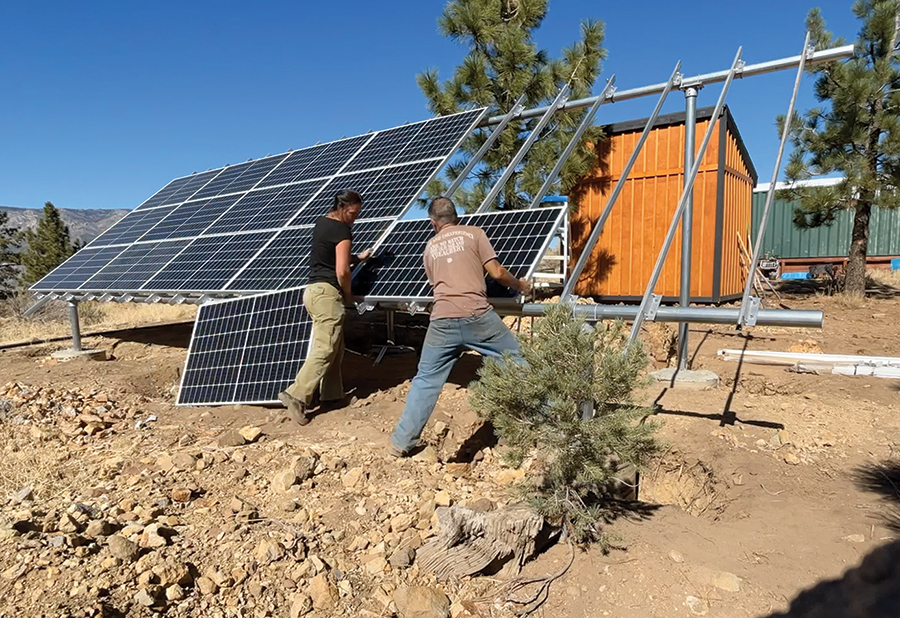
Mike O’Dell and his wife Rose install panels on a ground-mounted solar array at their off-grid property. Their project reflects the owner-builder side of the DIY solar market: customers taking an active role in building their own power infrastructure while relying on professional design and support. © Mike O’Dell, Unbound Solar
Mike and Rose O’Dell’s off-grid property illustrates this mindset.
They were not simply adding panels to an existing home. They were building the energy infrastructure for a property that includes a home, a well system, battery storage, backup power, and a dedicated “solar house” for equipment.
Mike was very hands-on, but what makes his story a strong owner-builder example is the larger project context. Solar had to fit into the way the whole property worked. Decisions about equipment location, cable sizing, pumps, batteries, loads, and future use all mattered because the system was part of making the property livable.
Throughout construction, design decisions evolved. Inverter locations changed. Cable runs extended. They worked through ground-mount decisions, off-grid power needs, and troubleshooting. Mike emphasized that equipment can be purchased from many places, but the real value was information, design guidance, and support after the sale.
His experience highlights why owner-builders value ongoing technical guidance long after equipment has been delivered.
Why Guided DIY is Replacing Equipment-Only Sales
There is a fundamental shift in how DIY solar is delivered. It’s no longer just about selling equipment; it is about providing professional support.
A successful DIY solar project starts before anything goes on the roof. It starts with a professionally designed system, safe and compatible equipment, a clear plan for permitting and interconnection, and an honest understanding of which parts the homeowner will do themselves and where they will bring in expert help. At a minimum, every DIYer should get expert support with system design and equipment selection.
Correct design is the foundation of the project. The system needs to be designed around the customer’s actual goals, home, utility requirements, site conditions, electrical infrastructure, and future plans. A customer who wants to reduce their power bill may need a very different system than a customer who wants to protect critical loads during outages. While a customer planning for EV charging, a heat pump, or future expansion may need a different design than someone simply offsetting current usage.
Equipment selection is just as important. The components need to be safe, certified, compatible, and appropriate for the installation. Solar should be designed as a complete and carefully constructed system, not assembled from a random pile of parts.
Permitting support is equally valuable.
Many experienced homeowners discover that the paperwork proves more challenging than the installation itself. Engineering documentation, utility applications, inspection requirements, equipment certifications, and local code interpretations vary significantly between jurisdictions.
Missing engineering documentation, equipment certifications or labeling, inspection requirements, incorrect assumptions, or unclear plan sets can delay a project – so they should not be treated as afterthoughts. Because the permitting process depends so heavily on the system design, it is much easier when the design, plans, and paperwork are coordinated from the beginning.
Success often depends less on installing panels, and more on correctly preparing documentation before construction even begins.
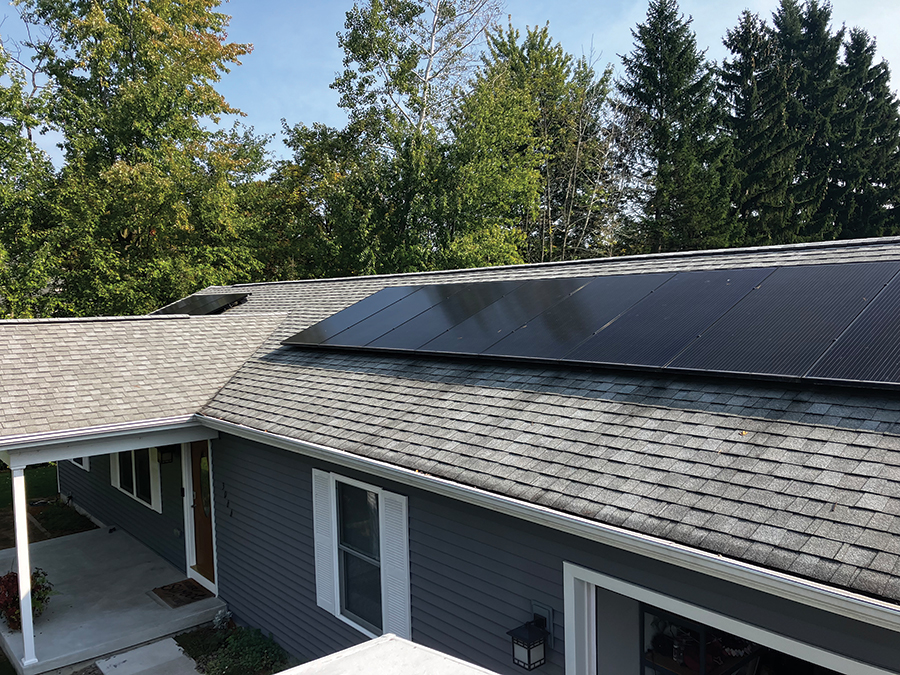
Kim Bloxom’s completed rooftop solar array. The project reflects the guided DIY model: capable homeowners taking an active role in their solar installation while relying on professional design, plans, and technical support. © Kim Bloxom, Unbound Solar
Customization Improves Safety—and Success
Customizing the experience matters because solar has to match both the customer’s capabilities and the project’s complexity. A simple grid-tied roof mount may require one level of guidance. A battery backup system, ground mount, off-grid property, service upgrade, or project with future EV charging may require much more design, documentation, and technical support.
Customization is also important for safety. Customers should be encouraged to take on the work they can reasonably and safely handle, while bringing in qualified professionals for the parts that require licensing, code expertise, or specialized experience. A good DIY model should not pressure everyone into doing everything themselves. It should help each customer make smart decisions about where to save money and where to get help.
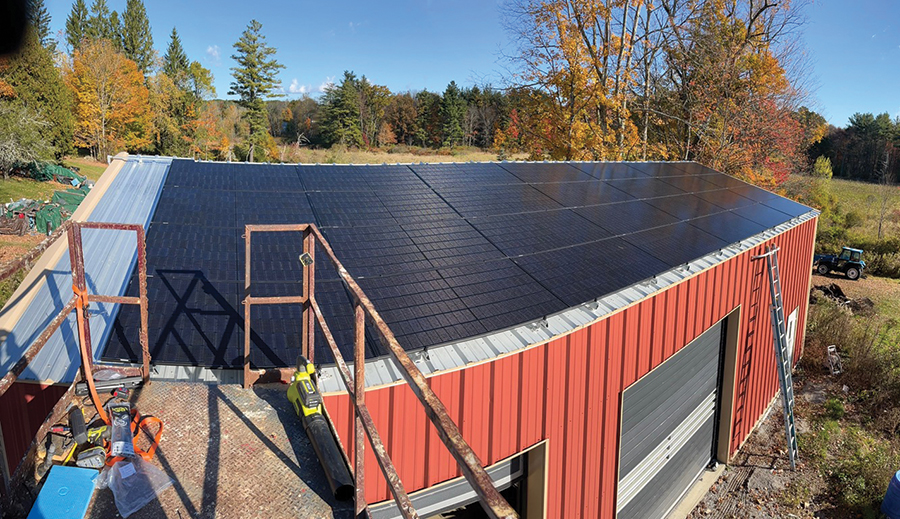
Dan Fontaine’s rooftop solar array installed on a metal-roof outbuilding. Many guided DIY customers use solar not only for the main home, but also for shops, barns, garages, and other property infrastructure. © Dan Fontaine, Unbound Solar
The best outcome is a system that fits the homeowner, not just the house. Customization lets customers stay involved, control costs, and learn the system, while still getting the professional support needed for design, permitting, equipment compatibility, battery integration, and inspection. That is what makes guided DIY scalable: it meets people where they actually are.
The Danger of “Frankenstein” Systems
Unfortunately, one troubling trend has accompanied the growth of online equipment sales.
Some homeowners attempt to assemble systems from unrelated components sourced from multiple vendors based primarily on price.
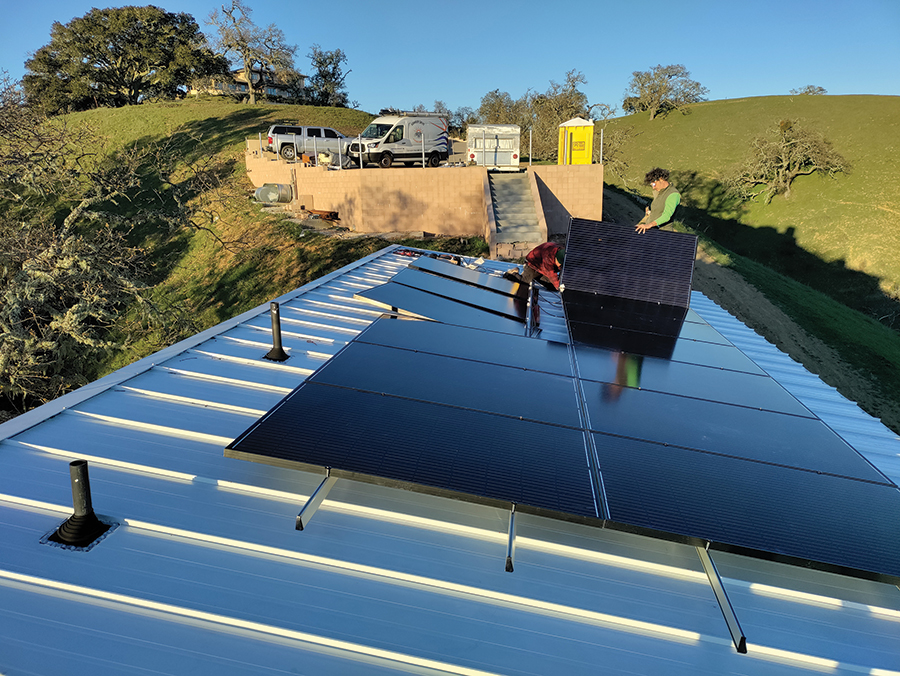
Ian Denchasy’s rooftop solar installation in progress. The project shows how guided DIY customers can take an active role in installing their system while relying on professional design, equipment selection, and technical support. © Ian Denchasy, Unbound Solar
This “Frankenstein” approach often ignores one of solar’s most important realities: a solar installation is an integrated energy system—not simply a collection of individual products.
Panels, inverters, batteries, rapid shutdown devices, monitoring platforms, and electrical equipment must communicate correctly, comply with applicable safety standards, satisfy utility requirements, and remain serviceable for decades.
This concern becomes even greater with battery storage.
The rapid expansion of battery manufacturers has created more consumer choice—but also more confusion. Not every battery marketed online carries the certifications, compatibility, or long-term support necessary for residential installations.
Selecting equipment based solely on price can create inspection problems, warranty issues, performance limitations, and, in some cases, significant safety risks.
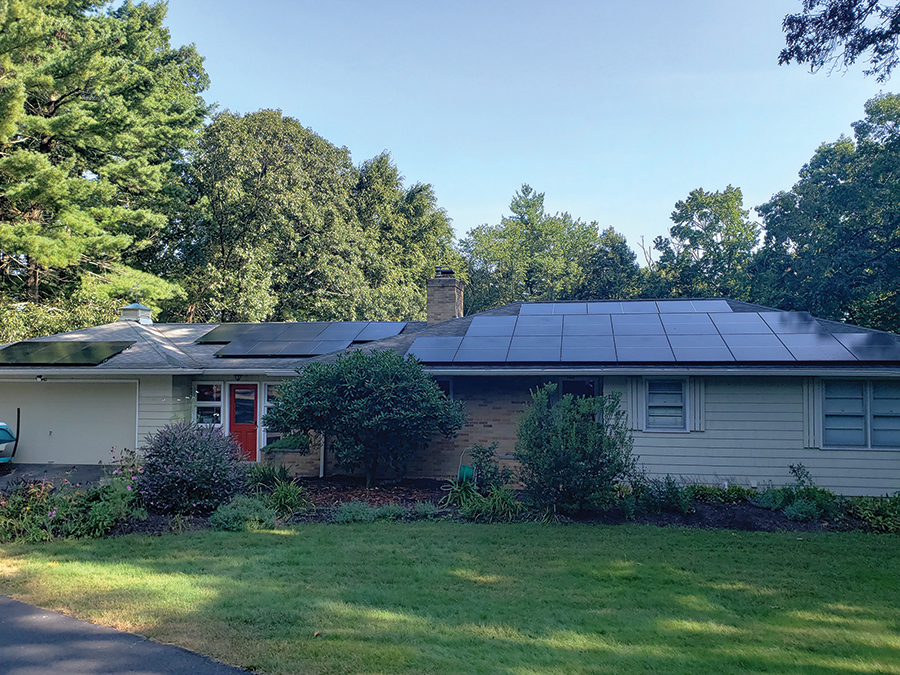
Ashton Grandy’s completed residential rooftop solar installation. The project shows how guided DIY solar can help homeowners use available roof space to build a system designed around their home and energy goals. © Ashton Grandy, Unbound Solar
Looking Ahead: DIY is All About Support
DIY solar’s next chapter extends well beyond rooftop panels.
Increasingly, homeowners are investing in complete energy ecosystems that combine solar, batteries, EV charging, backup power, intelligent load management, and software that coordinates everything automatically.
As these systems become more sophisticated, professional guidance and support become even more valuable.
Ironically, DIY solar has become easier physically, but harder informationally. There are more options, more online advice, more equipment brands, and more noise.
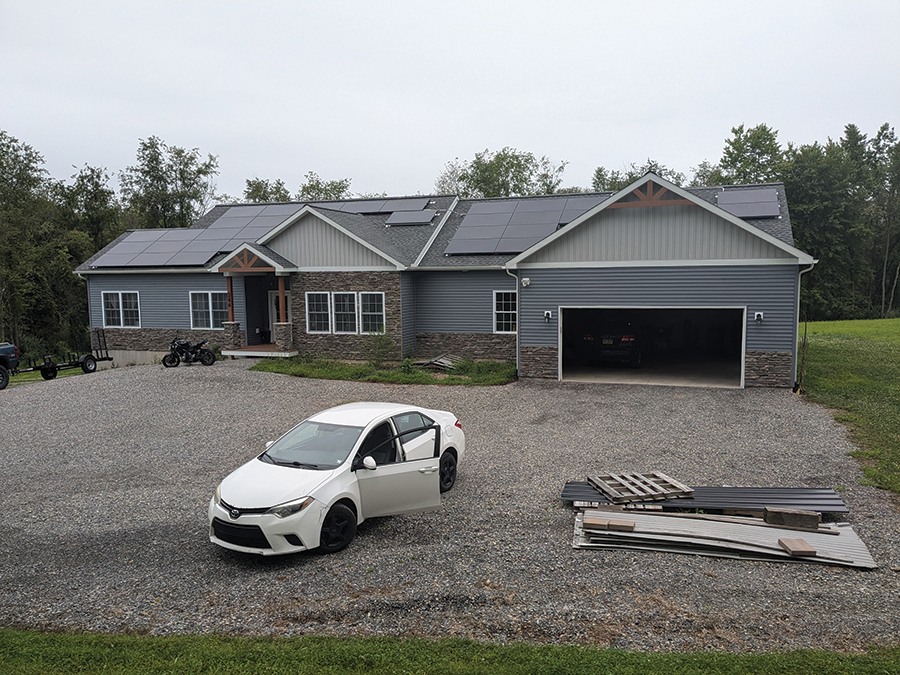
Tyler Hartline’s residential rooftop solar installation. Rooftop projects like this show how guided DIY solar can fit into a conventional home setting when the system is professionally designed and installed according to the project plan. © Tyler Hartline, Unbound Solar
As an example, YouTube, online forums, and social media have undoubtedly helped expand the market by showing homeowners that self-installation is achievable. But influencers should never replace experts – especially if affiliate marketing is involved. Solar is highly site-specific. Every home has unique electrical infrastructure, different loads and roof conditions, future energy needs, permitting requirements, and long-term goals that cannot be solved through a generic online tutorial.
The future of DIY is guided. Homeowners remain actively involved, but professionals provide engineering and technical expertise, and every system is custom designed to operate safely, efficiently, and reliably for decades.
This guidance also extends to post-install support. Many DIY companies are built around the transaction: sell the equipment and move on. But solar and storage systems are long-term infrastructure. Customers need monitoring, troubleshooting, firmware updates, warranty support, performance optimization, and a path for future expansion. That becomes even more important as systems include batteries, EV charging, smart load management, and backup power.
This model delivers something the original DIY movement often couldn’t: confidence that the system will perform exactly as intended long after the final panel is installed.
About the Author
Deep Patel is the founder and CEO of Gigawatt Inc., the parent company of Unbound Solar and Real Goods. Unbound Solar has provided DIY solar kits and expert support for over 19 years, serving homeowners, contractors, and professionals. Real Goods, established in 1978, is a legacy brand in the solar industry known for reliable solar and energy storage products. Through these brands, Deep is focused on expanding access to clean energy by combining education, high-quality components, and a customer-first approach.