



October 26, 2026

In this issue of Solar Today, we interviewed five solar influencers to get their thoughts on the pace, opportunities, and challenges of the solar industry.

Jay Warmke
Jay Warmke
About the Influencer
Jay Warmke is the author of numerous green technology books and has developed renewable energy curricula for numerous colleges and universities across North America as the owner of Solar PV Training LLC.
He has served as vice president of the board of directors of Green Energy Ohio and as president of the International Certification and Accreditation Council. In 2015, he was elected to ETA’s Board of Directors and for the past 11 years has served as Chair of the Renewable Energy Committee. He also hosts a weekly show/podcast called Solar Noon Tuesday, which is syndicated with the Pacifica Network and posted weekly on YouTube.
1. On the question of DIY Solar: how would you compare the good of opening the majority of the population to rooftop solar access vs. the bad of lost installer jobs?
There is, of course, room for DIY in our industry. Balcony Solar is just a first glimmer of the potential within that sector.
Most home and business owners will never tackle a solar project. But those who wish to should be nurtured and supported. I would love to see the expansion of “solar barn raising” projects – where groups of people support each other by helping with installations on each other’s sites and benefiting from volume purchases.
Solar installers can certainly find a market in serving as expert consultants or project overseers on DIY projects – expanding their reach into a customer base which might never otherwise install solar due to high costs.
2. What is your comment on the fact that 70% of the cost of rooftop solar in the U.S. in 2026 is neither labor nor equipment but rather soft costs?
If the solar industry built cars, we would custom design each vehicle, apply for permits and patents on a case-by-case basis, and then wonder why people can’t afford to buy them. We, as an industry, need to move from a “high-margin/low-volume” business model to a “high-volume/low-margin” model.
If we reduced our costs to $1/W (as in Australia), we would not need high customer acquisition costs (they would beat a path to our doors). Full adoption of SolarAPP+ permitting would cut time and costs in permitting.
I think there is also room for pre-designed solar package options that would cut design and installation time and work for a large number (not all of course) of homes and businesses.
3. What does a “mature” solar market look like to you in 10–15 years, and what are we currently getting wrong about that trajectory?
Several trends are converging that will remake the way we view energy. First is the tsunami of load demand that will hit us over the next few years (data centers, electric vehicles, cryptocurrency, electrification of heat, electrification of industry, climate change).
The net result of higher load demand, slow generation expansion, a glacial regulatory process, and resistant/greedy utilities will inevitably result in dramatically higher electric prices and diminishing grid reliability.
Currently, over half of new solar installations include battery backup (as storage prices fall dramatically). 2026 is shaping up to be the year bidirectional EV charging becomes a reality. Soon many will simply view the grid as a backup power system. It is a very short step to disconnect altogether if utilities continue to make it difficult to do business with them.
I think we will see dramatic grid defection over the coming years as customers find they can provide energy for themselves at costs that are lower and reliability that is higher than can be delivered by utilities.
4. How do you see the balance evolving between federal incentives and local control in accelerating deployment?
It is my view that normal government policy can only accelerate or retard the adoption of a technology for a short period of time. Government can tinker around the edges – but it is economics that will ultimately determine winners and losers.
Solar, for the foreseeable future, is simply the lowest-cost form of energy available on the planet. In generating electricity, it is half the cost of methane (natural gas), one third the cost of coal, and a fraction of the cost of nuclear. Its only close competitor is wind energy (which depends on an adequate wind resource).
Governmental incentives, when working as designed, are put in place to allow a nascent technology the breathing space to compete with more entrenched technologies. Solar is now past that phase in our development. We should no longer rely on incentives to compete. We just need to convince all those “free market” politicians to stop subsidizing fossil fuels.
5. What technical breakthrough would actually change the game, versus just incrementally improving it?
I am tempted to say true bidirectional EV charging – which expands storage capacity and affordability dramatically. Imagine a college campus where every parking space is a battery and the campus has a virtual power plant in every parking lot.
But I think a more transformative innovation will be the evolution of energy as a service. One day we shall see energy, not sold in kWhs or gallons of gasoline, but as services that simply incorporate the energy they use as part of that service. When you subscribe to Netflix, you are buying bandwidth – but you don’t pay for the bandwidth; you pay for entertainment.
We are beginning to see the first glimmers of this transformation. In Texas, you can now subscribe to a battery backup for your home. You pay $29 per month (or whatever the cost from whatever vendor you choose), and they install a battery at your home. They make their profit by aggregating the thousands of batteries now connected to the grid as a virtual power plant that can sell power to the grid during moments of peak load demand. This is largely transparent to the homeowner – who has no up-front costs and pays a monthly fee, so they have power in the event that the grid goes down.
The grid will survive not because it is the best way to distribute power. That
is no longer the case. In 2026, solar+storage is cheaper than continuing to buy power from your local utility. It will survive because it has found a way to profitably market energy services that depend on customers being connected together within an energy network.
6. How do you see ownership structures (utility-scale, distributed, cooperative) evolving over the next decade?
I believe that within 15 years the largest provider of electricity in the nation will be a virtual utility. The hyperscalers of the world (Microsoft, Google, Amazon, Meta, etc) are fast becoming the largest consumers of electricity. They will soon find it profitable to vertically integrate power generation and distribution for their own operations (cutting out developers and utilities). They will quickly become the largest distributors of power to third parties as well, selling excess power at retail (not net-metered wholesale).
Apple, for example, could create the “I-Power” network where they leverage their grid access to facilitate transactions between solar owners (who are tired of getting ripped off by utilities with ever lower net-metering compensation) and potential power customers who can purchase this net-metered power at a fraction of the cost that utilities charge.
In 1996, the Federal Communications Commission (FCC) required that the Bell system lease their physical local distribution network to competitors. This led directly to the rapid expansion of the Internet.
A similar ruling for similar reasons might find that the regulated utility power grid gets a much-needed disruption from Silicon Valley – creating a system of connected energy services that fully accommodate virtual utilities, virtual power plants, micro-grids, and data-over-powerline services that transform our electrical system in a way that the Internet and wireless transformed telephony over the past few decades.
The regulated utilities cannot compete with Silicon Valley, but they will not go away. They will simply be relegated to the role of “maintainers of wire.”
7. Most overrated buzzword in clean energy?
“Payback period.“ Power is a forever cost. The price of electricity from solar should be compared with the cost of electricity from other sources – not some theoretical (and generally mythical) date when your electricity
will be free.
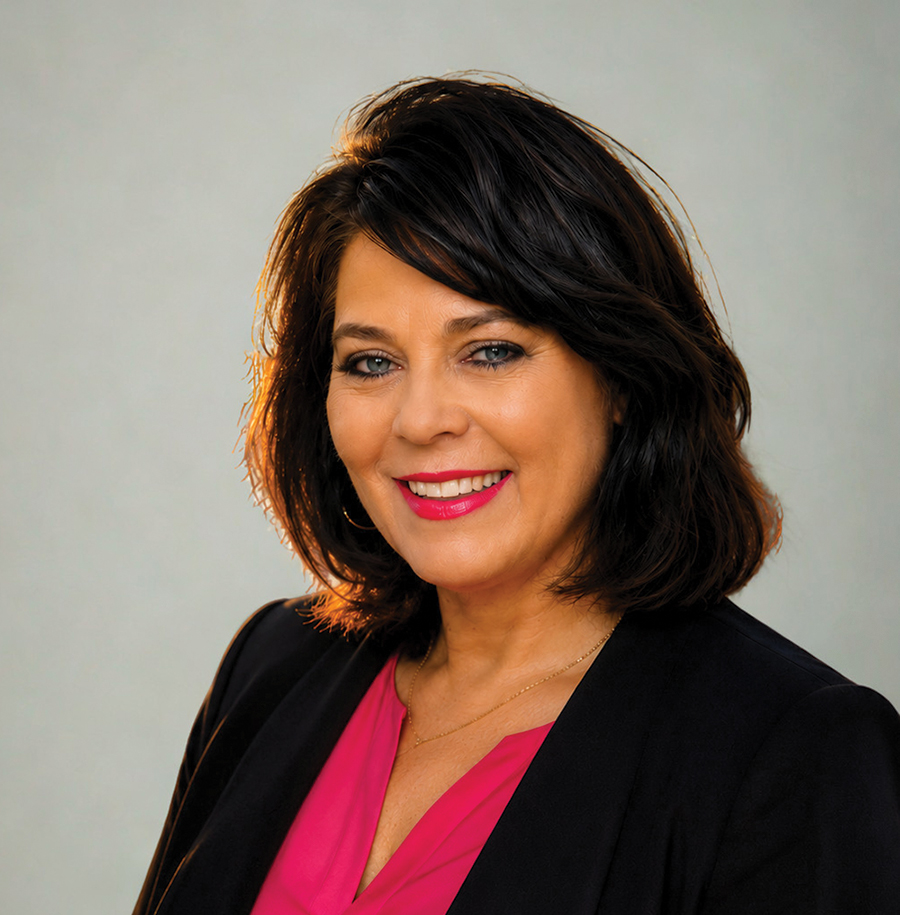
Mary Ellen Barker
Mary Ellen Barker
About the Influencer
Mary Ellen Barker is Co-Founder and CEO of Solar Land Agent, LLC, a woman-owned renewable energy firm specializing in solar and BESS site selection. Raised on a Georgia family farm, she brings experience in agriculture, business, and real estate to help developers and landowners create successful projects. She serves on the ASES Board of Directors and advocates for responsible renewable energy development, land stewardship, and meaningful community engagement.
1. On the question of DIY Solar: how would you compare the benefits of opening the majority of the population to rooftop solar access to the drawbacks of lost installer jobs?
I see DIY rooftop solar as an opportunity to make clean energy more affordable and accessible for American families. As electricity demand continues to rise, success should not be based on who does the installation. It should be about expanding solar adoption while maintaining high standards and supporting a skilled workforce. We should look for every responsible way to increase access to rooftop solar. Experienced installers will always be essential because structural integrity, electrical work, permitting, inspections, and utility interconnection require expertise. Innovation and expertise can work hand in hand.
2. What is your comment on the fact that 70% of the cost of rooftop solar in the U.S. in 2026 is neither labor nor equipment but rather soft costs?
Rooftop solar has higher soft costs because of its business model. Every installation is unique, with different structural, electrical engineering, design, permitting, inspection, and local labor requirements. Most homeowners also finance their systems, adding underwriting, lender, and dealer fees. Customer acquisition is expensive, often $3,000 to $5,000, due to door-to-door marketing, digital advertising, outbound sales, and commissions. Residential installers also carry overhead for vehicles, insurance, office space, and operating systems.
By comparison, utility-scale projects benefit from economies of scale, keeping soft costs closer to 15% to 30%.
3. How should the industry rethink land use conflicts especially in agriculture, conservation, and rural economies?
As someone who grew up on a Georgia farm and now helps site renewable energy projects, I believe we need a more balanced conversation about land use. According to SEIA, utility-scale solar currently uses just 0.07% of America’s farmland. By comparison, suburban development uses about six times more prime farmland, and golf courses use nearly three times more than solar. The conversation should not be agriculture versus solar. It should be about giving farm families and landowners choices, respecting property rights, and finding the right use for each piece of land. Agrivoltaics is another opportunity to help keep family farms thriving.
4. How do you see ownership structures (utility-scale, distributed, cooperative projects) evolving over the next decade?
I don’t believe one owner and model will dominate. As electricity demand continues to grow, utility-scale, distributed and cooperative projects will all play important roles. I believe we’ll see continued growth across every segment as the industry matures. Other countries have already shown what’s possible, and I think the U.S. is still in the early chapters of its solar story. We’ll also likely see more consolidation, with larger companies acquiring smaller ones, but I believe the companies that build trust, innovate, and deliver value will be the ones
that thrive.
5. If you had to explain Solar’s value to a skeptical community in one sentence, what would you say?
“We are not splitting the atom, just harvesting the sun.”
6. How do you see the balance evolving between federal incentives and local control in accelerating deployment?
Federal incentives can help create opportunity, but projects are ultimately built one community at a time. In my experience, what often gets overlooked is that it all starts locally. The energy transition does not begin in Washington. It begins with conversations in local communities, listening to landowners, engaging local leaders early, and earning trust before permits are ever filed. Incentives may encourage investment, but local relationships determine whether projects move forward. If we want to accelerate deployment, we need to invest as much in community partnerships as we do in policy.
7. Most overrated buzzword in clean energy?
“Energy transition.” I think the phrase “energy transition” implies we’re simply replacing one energy source with another. What I’m seeing is an expansion of our energy system. As electricity demand continues to grow, driven by AI, data centers, and advanced manufacturing, we’ll need every reliable electron on the grid. Solar is an important part of that future, but so are transmission, storage, and other generation resources. The conversation shouldn’t be about one technology winning. It should be about working together to build a stronger, more reliable, and more resilient energy future using all of the sources.
8. A project or place that changed how you see solar deployment?
The place that shaped me most wasn’t a solar project. It was the family farm where I grew up in Georgia. Farming taught me that land is deeply personal. It’s where families build their lives, weather hard seasons, and hope to leave something better for the next generation. That perspective has stayed with me throughout my career. Every time I sit down with a landowner, I remember that I’m not just discussing a project. I’m talking about someone’s legacy, and that conversation deserves respect, honesty, and trust.

Brett Little
Brett Little
About the Influencer
Brett Little is the education manager at the GreenHome Institute with over 15 years of experience in residential Green Building Consulting and training. Brett personally helped launch the Michigan Energy Works program over a decade ago. He added Solar and batteries to his own Green Home project in 2020, and then added more during a new roofing project in 2025. Brett is passionate about ensuring people who are excited about Solar also understand energy, efficiency, and electrification, and that health and comfort need to come first.
1. On the question of DIY Solar: how would you compare the good of opening the majority of the population to rooftop solar access vs. the bad of lost installer jobs?
My organization, the GreenHome Institute, seeks to empower people to make the places we live better, not necessarily to ensure solar installer jobs; anything that can lead to greater empowerment is good. But the downside is the risk of poor installations that could, at best, not save energy and, at worst, create safety problems. Therefore, I’m cautiously optimistic about doing it yourself: solar and battery plug-and-play systems, assuming there’s strong legislation and enforcement in place to protect people.
2. Please comment on the fact that 70% of the cost of rooftop solar in the U.S. in 2026 is neither labor nor equipment but rather soft costs.
I’ve heard some of these large numbers going around, but I haven’t seen them personally or anecdotally in my own system costs or in others’, so I’d like to see more evidence for that. Obviously, I agree that, compared to other countries, we have work to do to reduce soft costs by eliminating unnecessary red tape. In addition, we need more value: do the inspectors we pay for via permits actually look at electrical or roof safety? Do they understand utility savings and make sure people aren’t being ripped off?
3. What’s a widely accepted assumption in the solar industry that you think is wrong—or at least incomplete?
People still believe that Solar works less well in the cold, and of course the opposite is true. To be fair, when it’s cold in winter, there are fewer hours of solar output, so that part is true, but it’s usually not highlighted.
4. What technical breakthrough would actually change the game, versus just incrementally improving it?
I think one of the biggest complaints about solar is from people who try to use the excuse about lack of recyclability, so imagine if we made Solar the same way nature does it? 100% bio-based, compostable, locally manufactured, powered by renewable energy, and nontoxic. Just like a leaf!
5. How do you see ownership structures (utility-scale, distributed, cooperative) evolving over the next decade?
I think Community Solar will become the most popular way to reduce risk for everyone while still ensuring people receive benefits. Hopefully, it’s done at an even more local neighborhood level to generate microgrids that actually keep people’s power on.
6. What experience most changed how you think about energy—not just professionally, but personally?
I am not a full-time solar pro, but I need to understand it as part of a holistic home system for my work at the GreenHome Institute. However, the best way to experience solar is to own it. I first did it with a portable PV panel and battery, and later managed, financed, and purchased a solar PV whole-home project for my home. Later, I added more by doing a re-roofing project and adding more solar while putting back what had already been there. That has been the greatest experience for me.

Rob Sternthal (left) with friend and XIP colleague Aaron Richardson on the Sydney bridge climb.
Rob Sternthal
About the Influencer
For the last 20+ years, Rob has been a leading investment banking executive and recognized platform builder across the renewable power, energy, ESG and real assets sectors, advising on more than $25 billion of transactions. Prior to founding XIP, Rob was a Managing Director focusing on renewable power at Piper Sandler. Before that, Rob was responsible for building platforms at Rubicon Capital Advisors as well as CohnReznick (now CRC-IB). Rob founded and built CRC into a market-leader over ten years, managing a team of ~30 professionals that completed nearly $18 billion in transactions during his tenure.
Prior to CRC, Rob established and led multiple real estate and asset-backed securities practices for Credit Suisse in the United States as well as internationally. He began his career as an attorney for the US Securities & Exchange Commission as well as in private practice at Milbank. Rob received a bachelor’s degree in economics and French, with honors, from Emory University and a Juris Doctorate, cum laude, from the Temple University School of Law. Rob is a Registered Representative of BA Securities, LLC. Member FINRA, SIPC.
1. On the question of DIY Solar: how would you compare the good of opening the majority of the population to rooftop solar access vs. the bad of lost installer jobs?
I don’t really see this as a loss of installer jobs. Even if panels become easy enough for homeowners to put up themselves, someone still has to install, service, and maintain them—just like any major appliance in your home. If making solar easier to self-install opens rooftop access to the majority of the population, that’s a clear win. The work doesn’t disappear so much as shifts toward maintenance and repair, and the addressable market grows large enough to support plenty of skilled jobs alongside far broader adoption.
2. What is your comment on the fact that 70% of the cost of rooftop solar in the U.S. in 2026 is neither labor nor equipment but rather soft costs?
It’s concerning, and it forces the question of where that money is actually going. When total costs run $3.50–$4.00 per watt, the biggest culprits are usually broker and sales fees and financing costs—not the panels or the crew on the roof. This is where the market has broken down: the companies originating these
assets are overpaying for origination, and that inefficiency passes straight through to the homeowner. Until we squeeze those soft costs out, rooftop solar will stay more expensive than it needs to be.
3. What’s a widely accepted assumption in the solar industry that you think is wrong—or at least incomplete?
For over a decade, the industry assumed that developing assets was itself the prize. Developers were rewarded with rich valuations and platforms sold for large multiples, even when they never held the assets or built recurring revenue that outweighed development spend and Selling, General, and Administrative Expenses (SG&A). That assumption no longer holds. Today there is no
platform value, only asset value, and those assets have to work harder: cash yields that were once 3–5% now need to be 7% or more. The business has shifted from selling a growth story to owning infrastructure that actually generates cash.
4. Which current policy mechanism is most overrated, and which underutilized lever could have outsized impact?
The Investment Tax Credit is the most overrated. It was meant to spur investment, but in practice it complicates financings. Historically, investors that bought ITC did not require or need insurance; with the advent of the transfer credit where the investor is simply buying the ITC, they wanted more protection, e.g., insurance. That insurance is used now on 80-90% of deals. Supporting the fair market value that sets the credit has spawned preferred-equity structures and, increasingly, insurance to protect the ITC—coverage rarely used before that now backs perhaps 80–90% of transferred credits. The underused lever is simplicity: a straightforward cash grant or a cleanly certificated, transferable credit would strip out layers of structuring and insurance cost, get capital to projects faster, and let more of each dollar reach actual deployment. Or we could just remove the ITC altogether if we can lower the cost of the systems themselves.
5. What experience most changed how you think about energy—not just professionally, but personally?
Buying solar for my own home. My summer bills dropped to nearly zero, then crept back up over time—especially once I added an electric car and my consumption grew. Watching my own electricity costs keep rising, even with panels on the roof, made the value of what we do tangible in a way no spreadsheet could. It’s one thing to model the economics for clients; it’s another to live them. That experience is a constant reminder of how meaningful this industry is to ordinary homeowners and businesses as we shift toward renewable resources.
6. If you had to explain solar’s value to a skeptical community in one sentence, what would you say?
It’s just math: look honestly at the cost of solar today, factor in where power prices are heading, and the simple economics make the case for using solar wherever you can.
7. Most overrated buzzword in clean energy?
“Platform Value.” Sellers still expect that they should be paid “platform value” or additional value for a renewable development platform. Buyers are generally not willing to pay this any longer, but may be willing to pay a premium for a company if they can justify it through other means (e.g., pipeline, synergies, necessity, etc.)