



By Yves Figuerola April 10, 2026
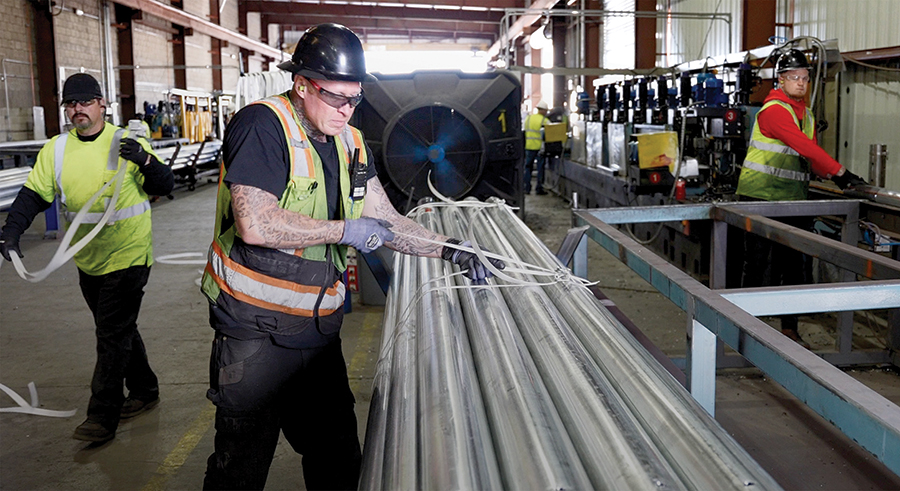
By replacing energy-intensive aluminum with steel framed PV, frame-related emissions can be reduced by 80% to 90% depending on the raw material source. © Nextpower
Over the past decade, one of the defining shifts in the solar industry has been the move toward a more geographically diverse supply chain. And while this transition has taken time, it has unlocked significant sustainability benefits – gains that are now shaping the industry’s long-term trajectory.
Necessity, as the saying goes, is the mother of invention. In the solar supply chain, the shift toward more localized production has proven transformative – driving value creation, strengthening energy security, increasing public acceptance of the energy transition, and improving sustainability outcomes.
While the initial push toward local manufacturing was largely driven by an urgent need, the benefits have since become increasingly compelling, particularly in reducing carbon emissions and fostering a more environmentally-responsible solar supply chain.
In today’s fast-moving solar industry, the supply disruptions caused by the COVID-19 pandemic may feel like a distant memory. Yet the repercussions of that period continue to reverberate. In early 2021, soaring shipping demand collided with constrained logistics capacity, causing shipping container costs to surge, particularly on long-distance routes.
At the time, UN Development and Trade reported that shipping costs between Asia and North America’s East Coast had increased by more than 60%, while costs between China and South America rose by an extraordinary 440%. One lasting outcome of this disruption has been a renewed focus on supply-chain security and the near- or on-shoring of component manufacturing. These efforts have been reinforced by broader discussions around the economic and strategic value of domestic solar-component production, as well as by policy initiatives designed to incentivize in-country manufacturing – most notably the Biden Administration’s Inflation Reduction Act.
Local Production 2.0
Solar supply routes remain exposed to a range of risks. In its Energy Technology Perspectives 2024 report, the International Energy Agency (IEA) highlighted the solar and clean energy sector’s reliance on “maritime chokepoints,” such as the piracy-prone Strait of Malacca. According to the IEA, roughly 50% of clean technology shipments pass through these potentially troubled waters.
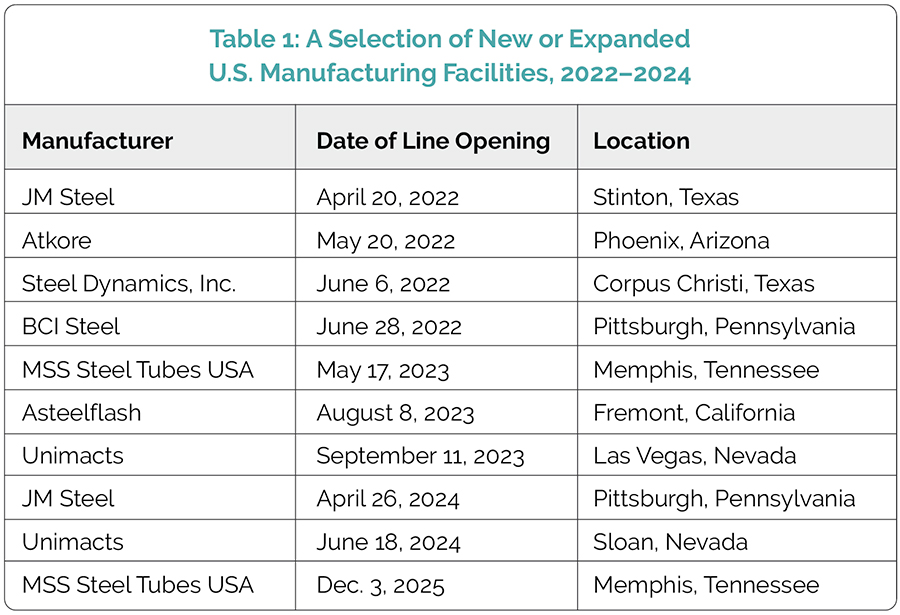
Building on its heritage in tracker supply and long familiar with the logistical challenges of transporting heavy steel components, Nextpower has been at the forefront of supply-chain localization. In less than three years, Nextpower transformed its U.S. supply chain and now works with more than 40 suppliers across North America – executing projects cost-effectively, with reduced supply-chain risk and 100% domestic content (see Table 1).
As 2026 dawns, Nextpower is sourcing components from more than 100 manufacturing sites in more than 45 countries.
Standing up new manufacturing facilities or adding production lines is an enormous corporate effort – particularly when maintaining rigorous quality standards and keeping costs under control. Even more challenging is doing so on an accelerated timeline, as is often required to meet domestic-content requirements.
But this geographically diversified manufacturing footprint continues to deliver clear supply chain advantages. Manufacturing facilities established earlier this decade have demonstrated their ability to deliver meaningful value for solar project developers, local communities, and the environment alike.
Job Creation
The creation of new employment opportunities in a future-focused industry is a major benefit of establishing local production. The idea of a “just energy transition,” in which climate action goes hand in hand with efforts to address economic inequality, originated within the North American labor movement and is now widely embraced. It has even been embedded in the language of the landmark 2015 Paris Agreement. By creating jobs across the value chain, the benefits of the energy transition are shared more broadly across society.
In 2024, Nextpower commissioned an independent study to quantify the impact of its local job creation efforts across North America. The study found that more than 7,780 jobs had been created, including 2,470 direct jobs, 2,350 indirect jobs, and 2,960 induced jobs – spanning manufacturing, fabrication, engineering, construction, research and development, and trucking and transportation.
These figures help quantify the substantial positive impact that solar project development and local production can deliver – yet the most enduring benefits cannot be captured by statistics alone.
Unlike the fossil fuel–dominated power system, which was built around a centralized “hub-and-spoke” model, the energy transition is giving rise to a more distributed, network-based electricity system. Clean energy generation is increasingly spread throughout the grid and often located closer to peri-urban and rural communities.
As communities come into closer contact with solar, wind, energy storage, and transmission projects, tensions can arise, sometimes slowing permitting processes or halting development altogether. When project development is accompanied by local job creation and economic participation, however, community acceptance is more readily achieved, helping to align local interests with the broader goals of the energy transition.
Enhanced Sustainability
While job creation and economic value are important outcomes of local production, its greatest impact is systemic – reshaping the sustainability profile of the solar supply chain itself. By way of context, global solar installations easily surpassed 600 GW in 2025, up from less than 60 GW just a decade ago. With solar now deploying at this massive scale, the sustainability of its supply chain has become as critical as the clean energy it delivers.
One clear example is steel production. In the United States, steel manufacturing is via Electric Arc Furnace (EAF) technology, which delivers significant emissions reductions compared with traditional Blast Furnace–Basic Oxygen Furnace (BF-BOF) methods. While BF-BOF steel production typically emits around 2.5 tons of CO₂ per ton of steel, EAF production generates only a fraction of that, approximately 0.8 tons. EAF processes also makes use of recycled steel as a feedstock – another environmental win.
Validation and Credentials
Translating these sustainability gains into products was an obvious next step. In April 2024, Nextpower introduced its NX Horizon Low Carbon Tracker (LCT) product to the market – a global first for the industry. Based on third-party verification, the solution delivers up to a 42% reduction in embedded carbon, compared with conventional alternatives.
For its flagship NX Horizon trackers, Nextpower is also raising the bar on sustainability. In 2025, the company became the first tracker manufacturer to develop an Environmental Product Declaration (EPD) – essentially a verified sustainability datasheet. While EPDs are commonplace in mature industries such as automotive, their adoption in solar represents an important step forward. An EPD enhances transparency and establishes a clear sustainability baseline from which continuous improvements can be measured.
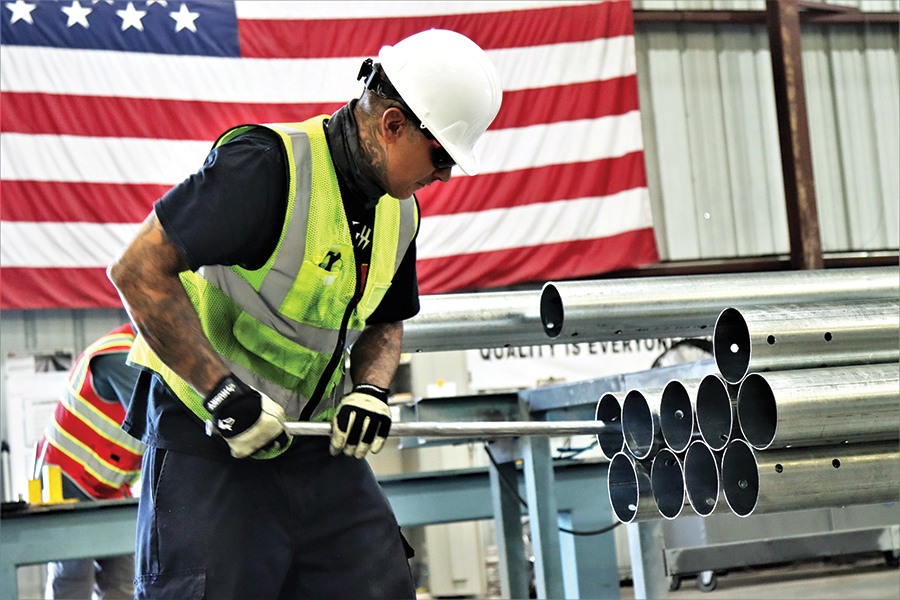
UMX line worker at Unimacts, Las Vegas, NV. © Nextpower
Accurately measuring and transparently reporting greenhouse gas emissions across solar tracker production and supply chains is critically important. According to Nextpower’s internal analysis, while PV modules – including cells, glass, and other materials – remain the largest source of embedded carbon in a utility-scale solar project at 43%, trackers are not far behind, accounting for 21%. By deploying NX Horizon LCT, that share can be slashed by almost half, to just 11%.
Another long-overlooked contributor to project emissions also warrants closer attention: aluminum module frames. Although slender, aluminum frames are responsible for an outsized 25% of a project’s embedded carbon. Here, too, meaningful progress can be made.
By replacing energy-intensive aluminum with steel frames, frame-related emissions can be reduced by 80% to 90% depending on the raw material source. Recognizing both this emissions advantage and the added structural robustness steel offers for today’s large-format modules, Nextpower acquired steel-frame developer Origami Solar in September 2025. The company is now working with project developers to bring this innovative approach into the industry mainstream.
Taken together, the combination of steel module frames and NX Horizon LCR enables utility-scale solar developers to reduce overall project greenhouse gas emissions by up to 32%, presenting a compelling and practical pathway to deeper decarbonization. Looking further ahead, the increasing adoption of EAF steel production opens the door to green steel in solar projects. Strategic partnerships between solar manufacturers and emerging green steel producers could therefore unlock a fully sustainable, locally anchored supply chain.
Cost and the Future
Raising the bar on sustainable materials and processes inevitably brings added complexity and cost. Similarly, local production is rarely, at least initially, the lowest-cost option. Over time, however, experience, scale, and the learning curve that has long benefited the solar industry can drive costs down. Encouragingly, a future in which local, sustainable production is also cost-competitive is well within reach.
There is little doubt that the solar industry is entering a new era – one defined by both tremendous opportunity and shared responsibility to both communities and the environment. A localized supply chain with sustainability at its core offers a clear path forward: enabling decarbonization that is cost-effective, equitable, and as environmentally responsible as possible.
About the Author
Yves Figuerola is SVP of Supply Chain and Sustainability at Nextpower. With over 15 years of experience in strategic sourcing, logistics, and operations leadership across multiple continents,
he specializes in building resilient, cost-efficient supply chains for large-scale solar manufacturing. Yves holds a Master of Science in Industrial & Mechanical Engineering from Arts et Métiers ParisTech and a Master of Science in Industrial Organisation & Supply Management from Universidad Carlos III de Madrid.