ADVERTISEMENT


SOLAR TODAY Blog

Daily dose of solar news and Q&As

Major CSP projects switch to dry cooling

On Monday, the German-backed Solar Millennium LLC dropped plans to buy rights to a billion gallons a year of water for two proposed CSP arrays in Nevada's Amargosa Valley. By switching to dry-cooling condenser technology the company expects to cut water needs by 90 percent, easing resource conflicts with local farmers. See

Solar Today provides background on the energy-vs.-water issue in the upcoming January-February issue. See Water versus Energy: How Solar Power Can Help, by Carey W. King and Michael E. Webber.

Sanyo to quadruple PV manufacturing

Sanyo Electric announced today that it plans to more than quadruple its solar cell production capacity to 1,500 megawatts by 2015, with the goal of holding 10 percent of the worldwide market. Short term, the company said it will expand solar cell production capacity by 66 percent, to 565 megawatts, by March 2011.

The company will be acquired by Panasonic before the end of this year.

India, China plan major solar push

India's government on Friday will launch an ambitious program to generate 1,000 MW of solar power by 2013, expanding to 20,000 MW by 2020.


Quantum dot device may convert heat to voltage near Carnot limit

By Seth Masia
Solar Today managing editor

The thermophotovoltaic (TPV) reaction converts the heat energy radiated by a hot body directly to an electric potential. A team led by Peter Hagelstein of the MIT Research Laboratory of Electronics reports that quantum dot devices in near-surface electric fields can improve the efficiency of the TPV reaction by orders of magnitude, with the potential to convert energy at up to 90 percent of the Carnot limit, the theoretical limit for the efficiency of thermodynamic devices. Current TPV technology maxes out at less than 10 percent of the Carnot limit.

The work was published Nov. 13 in the Journal of Applied Physics. Commercial development is underway at MTPV Corp., founded by MIT grad Robert DiMatteo, who hopes to introduce a product next year.


By Joseph McCabe
SOLAR TODAY "Solar Prose" columnist

The latest solar conference
Was well attended
Solar is a real industry
Speculation has ended

Many new faces
Were at the show
Joining industry veterans
Because solar will grow


By Liz Merry
SOLAR TODAY "Ask Ms. Liz" Columnist

With all the federal funding for solar training and workforce development finally being distributed, there are more choices than ever for classroom, field or online solar training. The majority of classes are targeted toward solar installation skills, but I've noticed many new online courses from consultants and/or adult-education providers on solar sales training or starting your own solar business.

At the recent Solar Power International conference, I asked a panel of solar installation company employers what they are looking for from an applicant. "Race horses, not specialists," was the consensus. They need "start-up mentality" employees, who are willing to work hard, with stamina and enthusiasm. For most specific skills, the employers said they will train new employees. This is not to say that you don't need to understand how solar works, but it reiterates that networking and demonstrating your passion for the technology is probably as important as taking a training course. Participating in your local American Solar Energy Society and/or Solar Energy Industries Association chapter activities is a good way to start learning about your local solar market.


By Seth Masia
Solar Today managing editor

The New York Times reported on Sunday that the EU may forbid the sale of all products containing cadmium, including thin-film solar modules. Manufacturers of thin film panels are lobbying to continue their exemption from the rule.

The manufacturers are on solid ground.


By Seth Masia
SOLAR TODAY managing editor

Very quietly, with hardly a press release, the huge German automotive parts maker Robert Bosch is setting up to be a major player in both PV and EV.

Bosch is at least a $50 billion company. It's been selling solar water-heating equipment for several years. Last year Bosch bought controlling interest in Ersol, a leading German maker of solar cells and modules, in silicon and thin-film formats. A couple of days ago the company bought a controlling share of Aleo, a leading German thin-film module manufacturer. This latest announcement suggests that Bosch will make controllers and other circuitry for EVs and possibly make inverters for its own PV modules.

Bosch is a unique company and does things in ways that would be considered odd in any other corporation. It's the world's largest maker of electrical parts for cars and trucks, and so it's been hurt badly by the downturn in the automotive business. Setting up for EVs would be a normal reaction to this situation - the company will naturally be the major supplier of components for European-built EVs, including products from VW, Mercedes, BMW and Fiat.

Bosch is 92% owned by a charitable foundation -- it's as if the Ford Foundation got 92% of the profits from Ford Motor Co. The company is run by a board of trustees who themselves hold less than 1% of the stock but vote the 92% of shares owned by the foundation - and the Bosch family owns the remaining 7%. So the company makes decisions quickly and based on long-term planning, not on short-term stock price considerations. One result is they spend twice as much on R&D, as a percent of their budget, as anyone else in the automotive business.

A little historical background: Founder Robert Bosch was a farmer's son who trained as a technician and then went to America, where he worked for Thomas Edison for a few years (he also helped found a Siemens division in the UK). Back home in Germany, in 1897 he invented the first commercially successful magneto for motor vehicles; five years later his firm marketed the first reliable spark plug. He set up factories around the world, including in the United States. During the Depression, instead of pulling in his horns, Bosch expanded and diversified; he had a reputation for very progressive labor and social policies, which didn't do him much good after the Nazis came to power. Bosch died in 1942, and after the war the family restructured the company's finances to support charities worldwide.

I think Bosch is going to be huge in solar and electric transport, and very quickly. Those of us who grew up tinkering with old cars and motorcycles have deep respect, if not warm fuzzies, for Bosch. When the Triumph or Fiat wouldn't start, you could blame Joseph Lucas or Magneti Marelli. But no one ever cursed the name of Robert Bosch.


By Seth Masia
SOLAR TODAY Managing Editor

In a couple of blog posts a year ago I ranted about the foolishness of allowing General Motors to sell Opel. American car factories needed not to sell their efficient small-car divisions, but to import that technology.

Now that we, as taxpayers, effectively own the company, we can breathe a great sigh of relief that GM is going to do the sensible thing and keep Opel's fuel-efficient engines in the family. In fact the new Buick LaCrosse is built on an Opel platform. Good move. Now let's see a hybrid version.


By Seth Masia
SOLAR TODAY managing editor

U.S. Secretary of the Navy Ray Mabus last week announced that the Navy will reduce its fossil fuel use 50% by 2015. And by 2020, it expects to get 50% of all its energy from renewable sources.

This is a significant development. The Department of Defense accounts for about 2% of total U.S. oil consumption. About half of that goes to the Air Force, and about 75% of all DoD fuel goes to run vehicles (as opposed to heating and cooling buildings).

The Navy pushes its largest ships around with nuclear reactors, but it still burns a lot of diesel oil and jet fuel. The Marine Corps, officially on the Navy procurement budget, runs entirely on petroleum and testosterone.

Don't count on a return to the age of sail. The Navy plans to greatly expand its use of biofuels for aircraft, and improve the efficiency of heavy vehicles (including "littoral" or coastal vessels) through the use of diesel-electric hybrid drives. By 2016 it plans to have a "Great Green Fleet" battle group consisting of ships driven with no petroleum at all. (The name is a reference to the "Great White Fleet" dispatched by Teddy Roosevelt on a round-the-world tour in 1907-1909.)

The Navy will equip many bases with solar, wind, geothermal and tidal power generation facilities - as much for independence from the civilian grid as for carbon footprint reduction. It's conceivable that the Navy could become the technology leader in tidal-current power development.

The emphasis on biofuels is fascinating. Ethanol derived from corn or sugar is useless in formulating a substitute for Jet A and diesel fuel. Those concoctions currently come largely from canola oil. You may have reservations about competing with the Navy for salad dressing, but it sure beats boiling tar sands.

Another issue raised by Sec. Mabus: The Navy is worried about its future role in securing an ice-free Arctic Ocean. I wonder what it's planning to do for shore bases when  existing seaports have been submerged by two meters of sea-level rise?


By Corey Dahl
SOLAR TODAY Associate Editor 

 Renewable energy enthusiasts who expect big deals to come from the United Nations climate summit in Copenhagen this December might be in for some disappointment.

During the closing general session at Solar Power International this morning, several leaders -- including New Mexico Gov. Bill Richardson and SunPower CEO Tom Werner -- weighed in on what they expect will happen at the summit. Most agreed: nothing incredibly significant.


By Corey Dahl
SOLAR TODAY Associate Editor 

Forget trying to build brand recognition among your potential customers. In solar today, it's all about building brand connection.

While brand recognition means your company is known, brand connection means your company is known for doing something unique. It's an important distinction in an increasingly crowded solar marketplace, says Alan Brew, a principal at RiechesBaird and the host of "Building Brand Recognition" at Solar Power International today.


<< Start < Prev 1 2 3 4 5 6 7 8 9 10 Next > End >>

Current Issue

---------

Featured Contributors

---------
Seth MasiaSeth Masia
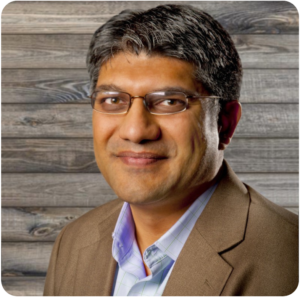
Seth Masia is SOLAR TODAY's managing editor and covers advances in solar energy on the blog.

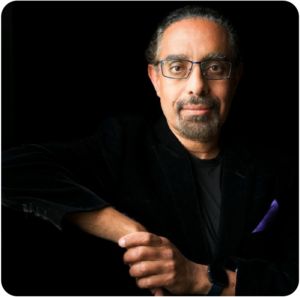
Joseph McCabeJoseph McCabe Joseph McCabe is SOLAR TODAY's "Solar Prose" columnist and an ASES Fellow.

Liz MerryLiz Merry
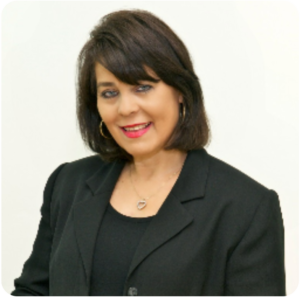
Liz Merry is SOLAR TODAY's "Ask Ms. Liz: Career Q&As" columnist.

Ken SheinkopfKen Sheinkopf
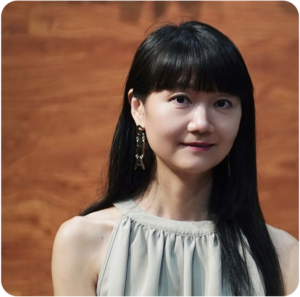
Ken Sheinkopf is SOLAR TODAY's "Ask Ken: Energy-Saving Q&As" columnist.

Categories

---------
•  Biofuel

Archives

---------
•  July 2008
•  June 2008
•  May 2008


ADVERTISEMENT

Banner