ADVERTISEMENT


July/August 2008

CASE HISTORY: Going Solar in a Condo


How one couple overcame the challenges to install a photovoltaic system at their condominium.


By Sarah Lozanova

solar condo
Despite our great passion for and jobs in the wind and solar industries, my husband and I assumed it would be impossible to install a solar electricity system at our condominium unit. We knew that Chicago receives enough sun to generate plenty of solar energy, but obtaining approval from our condo owners’ association seemed a lot less certain. The cost would be considerable for us as newlyweds. And although the roof had plenty of space for solar panels and good solar exposure, we don’t own exclusive roof rights. Yet when we sat down to create a gift registry before our wedding last September, we realized that the only thing we really wanted was a solar system.

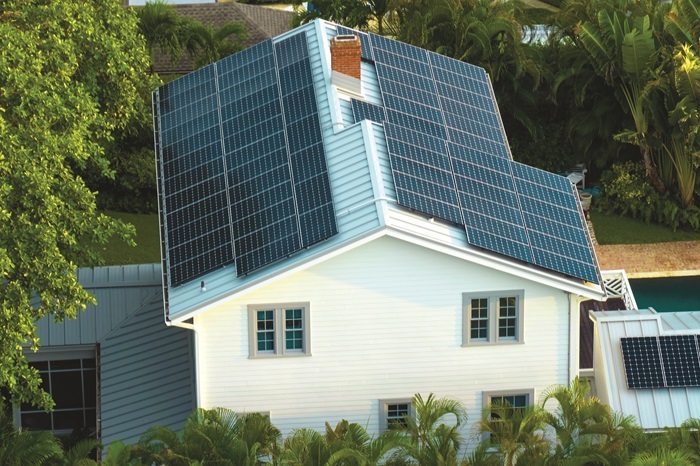
Less than a year later, our condominium is now equipped with a 1.7-kilowatt photovoltaic (PV) system that generates more than enough electricity on an annual basis to power our unit. How did we do it? Friends and family contributed to purchasing the solar system as our main wedding gift, with government incentives offsetting much of the remaining cost. But our passion to go solar was the most necessary ingredient, because installing the system for one unit of a condominium building required creativity, ingenuity and persistence.

Obtaining Support and Approval

Compared to houses, condominiums typically offer more energyefficient, eco-friendly living. Centralized water heating in our building reduces the standby losses experienced with numerous water heaters used less frequently. Shared walls lessen the heating load of
the building. Exterior lights benefit all inhabitants, reducing individual electricity consumption. And the smaller footprint of high-density buildings frees up open spaces for all to enjoy.

Despite these benefits, condo owners can find it difficult to implement narrowly supported green efforts, like a compost pile or rain barrels in the yard. I expected a solar system would be one of those cases. To my surprise, however, the other owners in the building welcomed our plans.

Approaching the condominium board of directors also was much easier than I thought it would be. We learned that there were no plans to use the roof other than for mounting satellite dishes. To help deter concerns about the solar system, we made several promises:

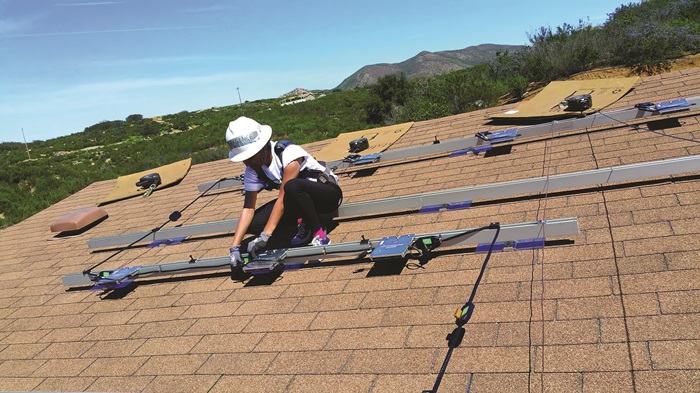
No penetrations of the roof membrane. Instead, to mount the panels we used an adjustable ballasted pan system, which is weighed down by cement blocks. That allows the panels to be moved easily if roof work needs to be performed. The angle of the panels can be adjusted by approximately 20 degrees depending on the seasonal angle of the sun.

Keep wiring out of sight. All the wiring was run down the back of the building and follows existing conduit when possible, so as to not change the aesthetics of the building exterior.

Contain system components in our unit. Again, for aesthetics, only the AC disconnect was mounted on the building exterior. The outside disconnect is required by our local utility, for access in case of emergencies or repairs. That means we needed to find a place for the inverter and the DC disconnect inside our unit.

After gaining permission from the condominium board to install our PV system on the roof, the next hurdle was determining the layout of the remaining solar components. Placement is rarely a problem in houses, because the electric panel — into which the system must feed — is typically in an unfinished portion of the basement. In our unit, however, the electric panel is located in the kitchen. We didn’t want the kitchen to look like a spider web of conduit with visible solar equipment mounted on the walls.

Luckily our kitchen is along an outside wall, although the electric panel is not. We installed additional cabinets to house the components and ran conduit to the outside wall along the top of the cabinets, out of sight. We decided to locate the inverter inside a cabinet with openings at the top and bottom for air circulation. It’s important that the inverter does not overheat to avoid reduced performance or system shutdown. Although our kitchen now houses solar components, they’re invisible when the cabinets are closed. We were also concerned about noise from the inverter, but when the cabinets are closed, the sound is barely audible.


Minimizing Electricity Needs

In planning our PV system design and financing, we were able to minimize the system’s size by reducing the amount of electricity we consume. Conservation is the best way to reduce the upfront cost of going solar, and it allowed us to install a system that generates 100 percent of our electricity. Even with three adults living in the 800-square-foot (74-square-meter) home, our average electricity use is 120 kilowatt-hours during noncooling months and just under 200 kWh during the summer. By comparison, the average U.S. household used 920 kWh per month in 2006, according to the U.S. Department of Energy.

To achieve this efficiency, we invested in an energy-efficient refrigerator, washer and dryer and installed compact fluorescent and LED light bulbs. The dryer is rarely used because we line-dry our clothes. That also reduces the need to run a humidifier during the winter because the clothes naturally humidify the air as they dry. We use air conditioners
modestly, only cooling the rooms in use and only as necessary.

We conducted a home energy audit using a device that monitors how much electricity a given appliance consumes. The device showed that our television, VCR, DVD player and stereo all constantly drain electricity, even when turned off. We now use power strips for these items, disconnecting them from the power supply when not in use.

To determine the size of the solar system, we used electric bills to calculate our energy usage during the prior year. PV Watts, a free web tool from the National Renewable Energy Laboratory, estimates the output of the solar system, taking climate, efficiency of system components and available daylight into account. We then matched the estimated output of the solar system with our electricity consumption for the past year.

Crunching the Numbers

Illinois has a state rebate program that pays 30 percent of the cost of the solar system. The paperwork for the program is relatively simple, and we received our rebate check within a couple months of completing the installation. We were also eligible for a federal tax credit of $2,000 (this credit is set to expire Dec. 31). The two incentives reduced the solar system cost of about $12,300 nearly 50 percent —to just under $6,600.

Illinois also recently passed net-metering legislation, making it one of the 40 states whose large utilities must purchase surplus electricity generated from solar systems and credit the generator’s utility bill. Our system will produce an estimated 2,000 kWh each year. We typically generate surplus electricity during the day and need more electricity from the grid at night. Our solar system does not have batteries, so electricity that we don’t consume flows to the power grid. Some of my neighbors like knowing that a portion of their daytime electricity may have been generated by the solar system. And the credits we receive on our electric bills for our surplus generation will reduce our low electric bills even further.

Chicago has relatively low-cost electricity, at about 8 cents per kilowatt- hour. The rates in Illinois were frozen for the last 10 years, with the freeze ending in January 2007. Some parts of the state saw spikes in electric rates, but our bills saw only a small increase because we use so little electricity. The utilities plan to raise rates again soon, thus shortening the payback period of our solar system.

Chicago has moderate sunshine, with blue skies about 55 percent of the time. A combination of modest electric rates and sunshine make the payback period of our system longer than if the same system were located in an area with higher rates, good sun and favorable incentives. Even if the utility raised our rates 5 percent annually, because our demand is so small, it would still take many years for us to recoup our investment costs. The way we see it, though, the price stability and health, environmental and security benefits of solar far exceed any utility bill payback.

Just as a solar system can increase the resale value of a home, our system is likely to increase the resale value of our condo. We have made several other eco-friendly improvements to our unit and hope that we can market it as a green condo when the time comes to sell.

Creating a Solar Legacy

My husband, Kiril Lozanov, works in the wind energy industry, and I work in the solar industry. (Our slightly different surnames follow the Bulgarian tradition.) So it seems fitting that we would ask for a solar system as a collective wedding present. One of our objectives in doing so was to share with the people in our lives the clean, healthy world we value and wish to support through our lifestyle. The wedding reception and gift registry were an ideal way to share this vision with our closest friends and family.

We created a wedding registry through a blog site where we described the solar system in detail. This was also a great opportunity to educate our 75 guests on an application of solar energy. The majority of our guests were excited to contribute to this gift.

For many people, solar energy is an exciting technology that they read about yet have little personal experience with. We enjoy showing our solar system to visitors and demonstrating that what may seem a futuristic technology is available and easy to live with right now.

It’s important for public knowledge to increase about solar energy, and I do all that I can to assist in this. The American Solar Energy Society organizes a National Solar Tour of solar homes each year, and I plan to have my home on the tour. (Find dates and locations
at nationalsolartour.org). I volunteer for my local ASES chapter, the Illinois Solar Energy Association (illinoissolar.org), as well as the nonprofit Climate Cycle. Climate Cycle organizes bike rides to raise funds and awareness about climate change (climatecycle.org). The first ride will take place in Chicago in October, with the proceeds used to install solar systems in schools.

Although I believe solar technology will mature significantly in the decades to come, I’m excited to be able to tap into this vast energy source now. I like coming home to see how much energy the system generated throughout the day and knowing that I’m part of the
renewable energy solution.
 
About the author:
Sarah Lozanova is a renewable energy specialist at Solar Service Inc. in Niles, Ill. She is the editor of the awardwinning Illinois Solar Energy Association newsletter, Heliographs, and publishes a weekly article on renewable energy for Green Options Media. She also serves on the board of Trees Across the Miles, an urban reforestationorganization. Lozanova earned an MBA in sustainable management from the Presidio School of Management and a bachelor’s degree in environmental studies.
 

Current Issue

September/October 2010
---------


ADVERTISEMENT